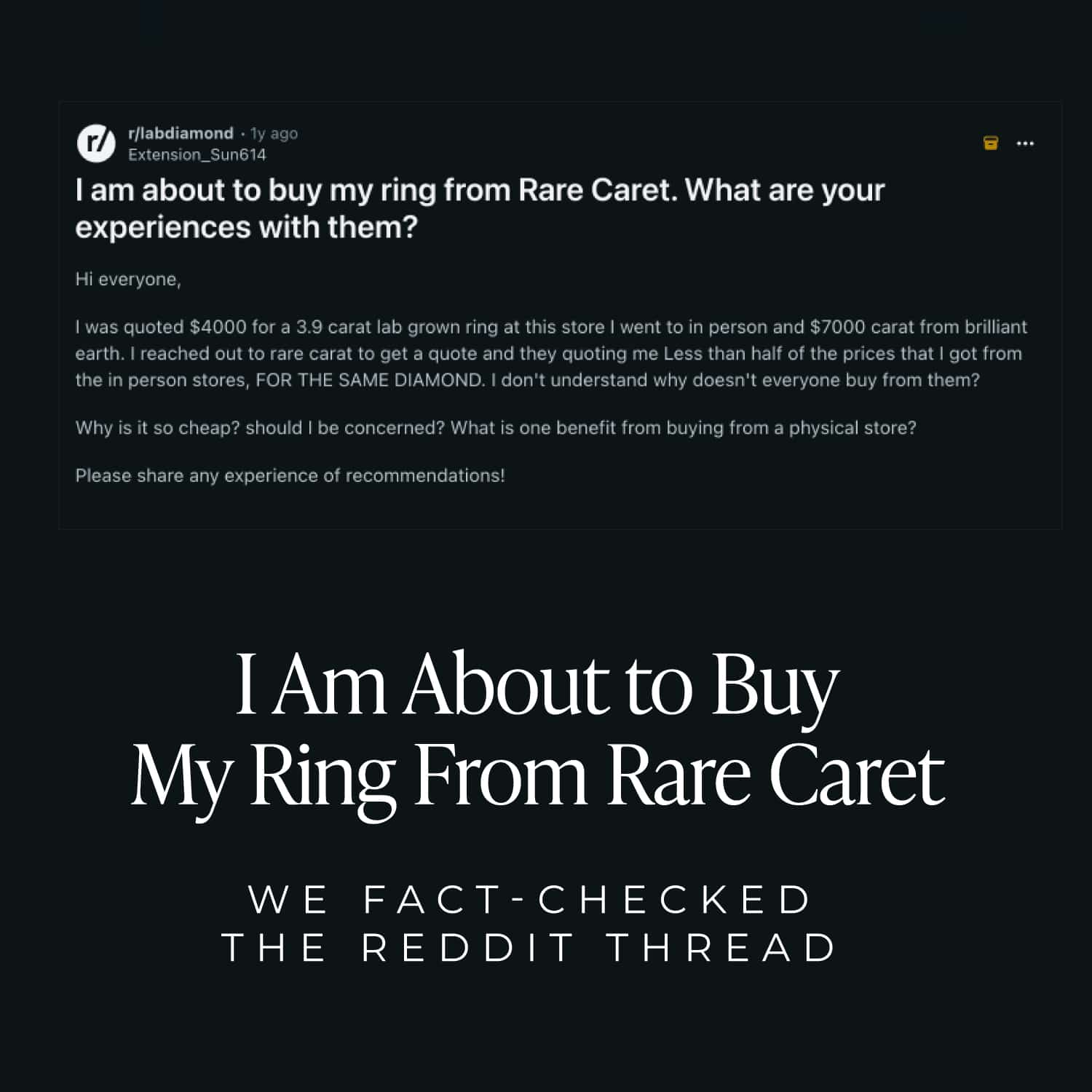
“I am about to buy my ring from Rare Caret, what are your experiences with them?” is the exact Reddit thread we’re fact-checking — typo in the title and all. The original poster was quoted $4,000 in-store and $7,000 from Brilliant Earth for a 3.9-carat lab-grown stone, then got a Rare Carat quote for less than half.
That gap isn’t a fluke — it’s backed by real, peer-reviewed research, and eleven other vendors get named along the way.
TL;DR
The single most useful fact: a Wharton School study using GIA certificate numbers found the exact same diamonds selling for 12–21% more on major platforms than at smaller retailers — which is the actual mechanism behind the price gap this entire thread is confused about.
- “Why is Rare Carat so cheap?” — Because certificate-matched price comparisons across the industry consistently find double-digit markups at big-name retailers, confirmed by independent academic research.
- 11 other businesses named in this thread — 9 verified real, 2 could not be confirmed.
- “Rare Carat is expensive unless you price match” — Also true, and not a contradiction of point one — it describes Rare Carat’s list price, not its matched price.
- A real craftsmanship complaint — One buyer’s account of a noticeably lightweight ring deserves to be taken seriously, not dismissed.
- A real return-policy tangle — Return windows, restocking fees, and frequency limits vary sharply across every vendor named, and we verified each one directly.
- The certificate-number warning — A specific, actionable tip about prong placement that’s worth knowing regardless of which retailer you use.
Diamond IQ Test: Natural or Lab-Grown?
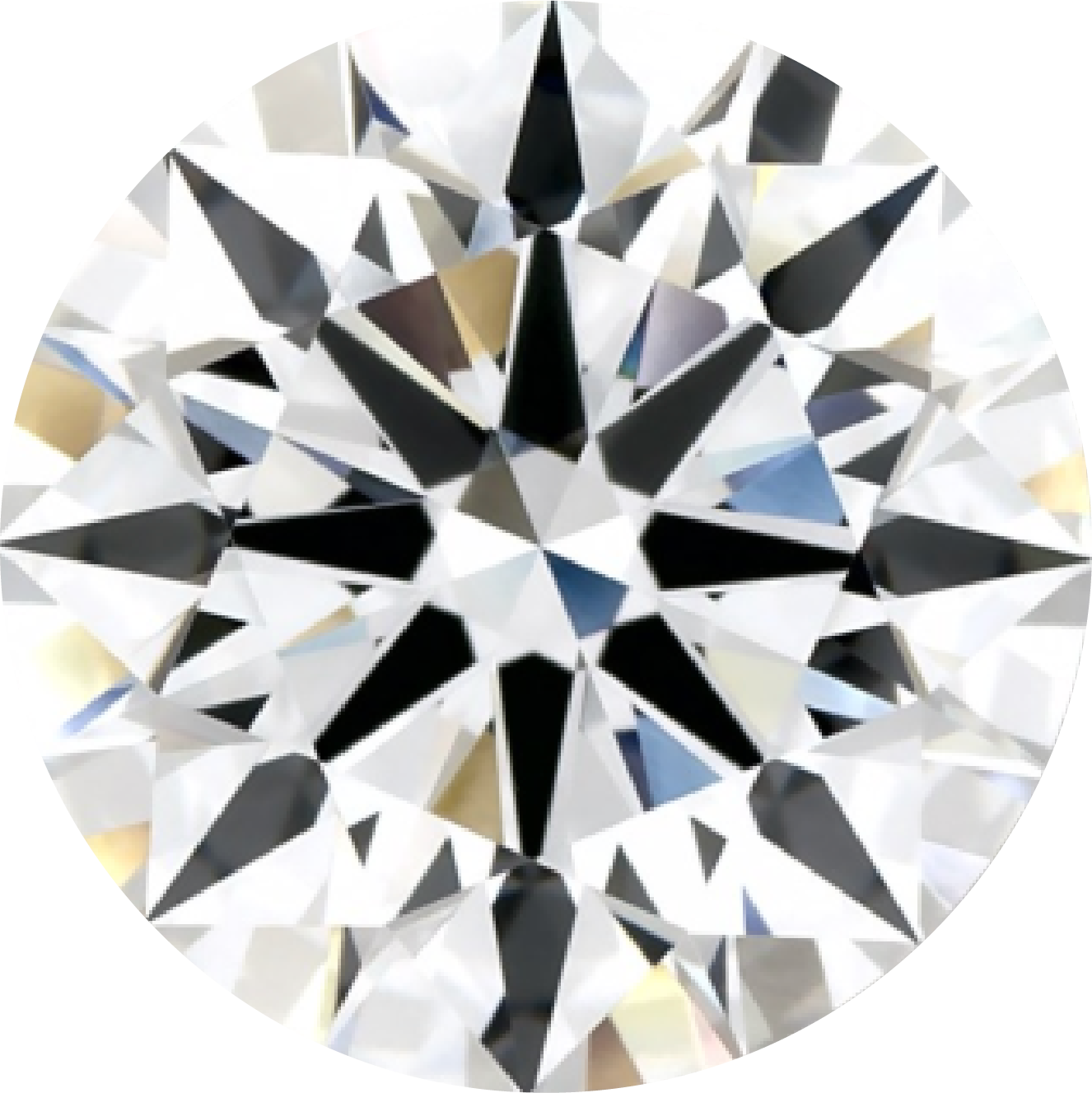
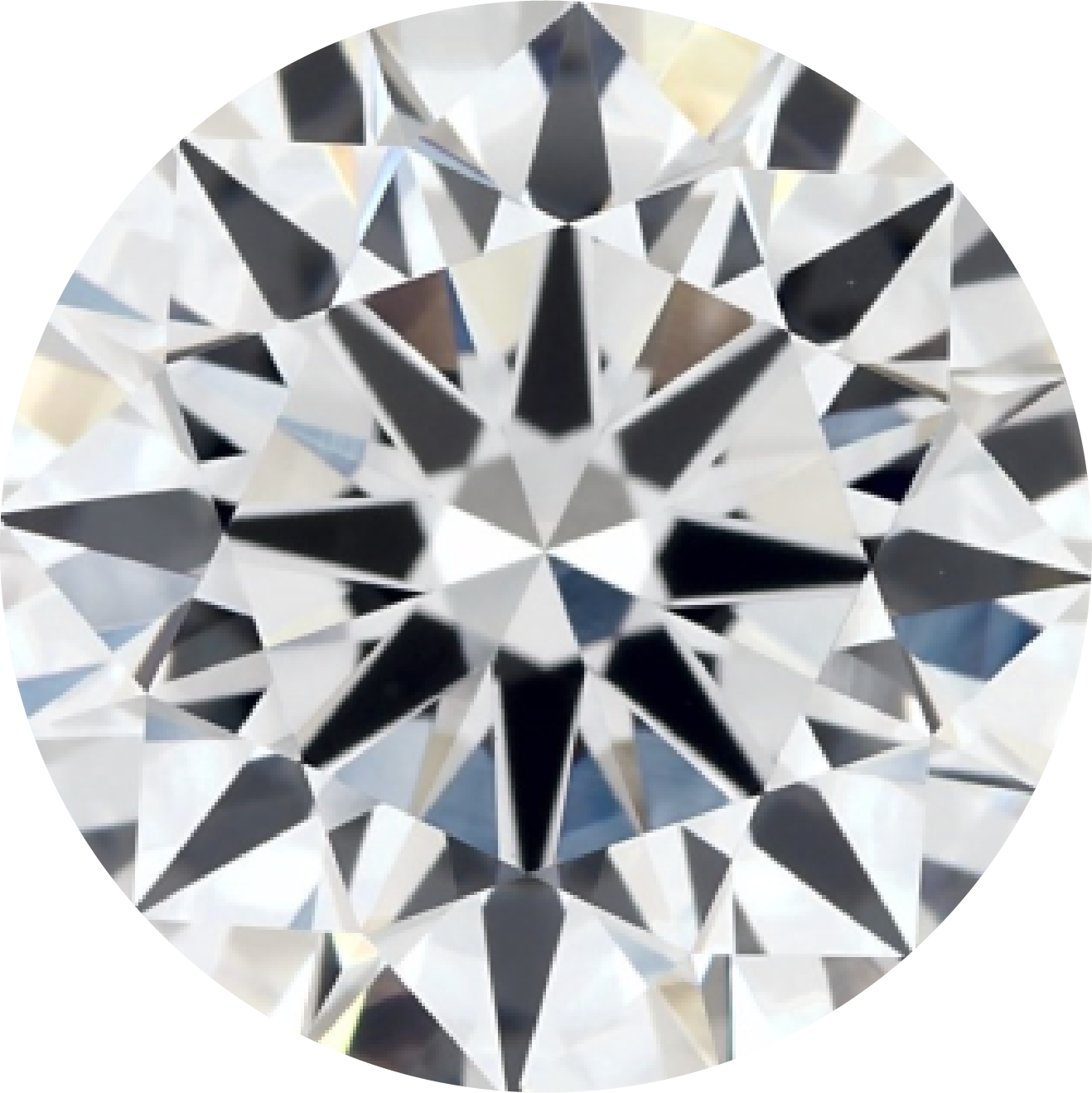
Two identical diamonds: GIA Certified, 1.51ct, D Color, VVS1, Ideal Cut. One is natural ($16,240), the other is lab-grown ($1,970). Choose the diamond you like better and see if you can match it to its origin.
About This Thread
Source: r/labdiamond — “I am about to buy my ring from Rare Caret, what are your experiences with them?” — a thread that has drawn dozens of detailed replies since it was posted. The original poster had been quoted $4,000 in person and $7,000 from Brilliant Earth for a 3.9-carat lab-grown stone, then received a Rare Carat quote for less than half, and asked the community what they were missing.
Mehedi’s Take: “This thread is doing something most ‘is X legit’ threads don’t — it’s actually asking the right question. The original poster didn’t just ask if Rare Carat is trustworthy, they asked why the price gap exists at all. That’s the more useful question, and it has a real answer.” — Mehedi Hasan, Diamond Industry Veteran
Why Rare Carat’s Price Looks So Different: The Real Research
“I just don’t understand why every single human is buying from other stores then?!” — the original poster, reacting to a commenter’s finished ring
Verdict: There’s real, independent research behind this, not just Reddit anecdotes. Katja Seim, a professor of business economics and public policy at the Wharton School, used GIA certificate numbers to track identical, certificate-matched diamonds across major platforms including Blue Nile, James Allen, and Brilliant Earth against smaller retailers. Her research found the same diamonds selling for 12–21% more on the larger platforms, on average.
Why it matters: This isn’t a claim that big retailers are scamming anyone — certified diamonds are fungible, and once you can search by the same GIA or IGI report number, a “different” listing is often the literal same physical stone with a different markup attached. Rare Carat’s original business model, before it began selling directly, was built specifically around exposing this gap using certificate-number comparison tools.
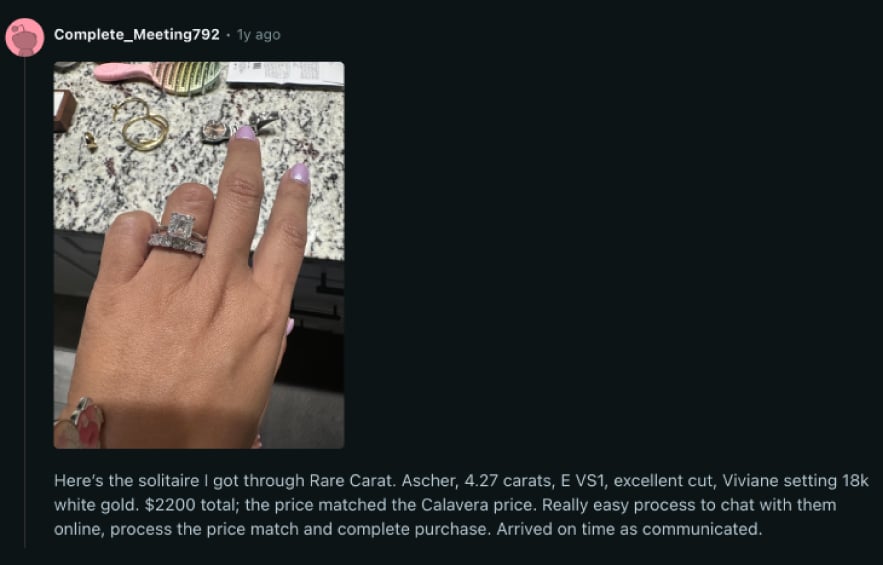
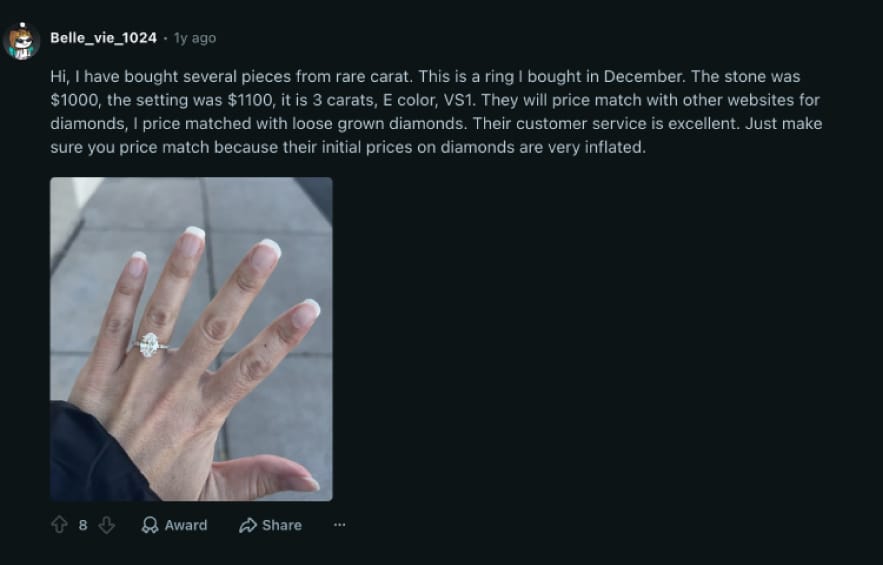
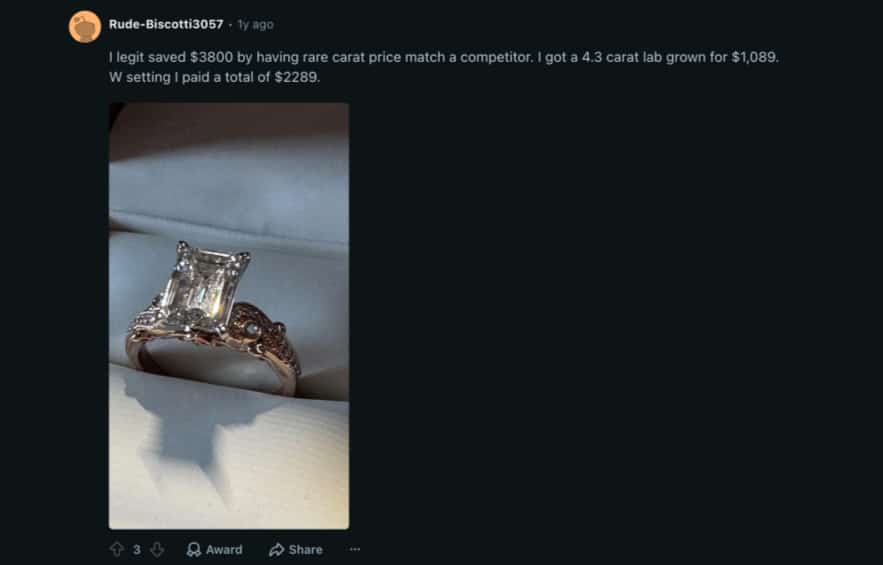
This thread alone documents a striking range of real, specific price-match outcomes, all pulled directly from named commenters describing their own completed purchases.
| Stone | Original / List Price | Final Price | Source Used to Match |
|---|---|---|---|
| 4.27ct Asscher, E VS1 | — | $2,200 total (ring) | Calavera |
| 3.29ct round, D VVS2 | $6,700 | $938 | Ruby Harper (unverified) |
| 4.3ct lab-grown | Saved $3,800 | $1,089 (stone), $2,289 total | Not specified |
| Unspecified stone | $5,600 (Rare Carat’s listing) | $999 | Calavera |
| 2.65ct round brilliant | — | $1,312 total | Calavera |
| 3.51ct radiant, VVS2 G | $2,175 (Rare Carat’s own listing) | $770 (bought direct instead) | Adiamor |
Verdict: These aren’t rounded, vague estimates — they’re specific carat weights, colors, and clarity grades tied to named source sites, which is a stronger form of evidence than a general “people say it’s cheaper” claim.
The original poster reported getting matched to that same $999 figure on their own stone, a detail we’re noting separately since their exact specs weren’t stated in that specific exchange.
If you want to try this yourself, Rare Carat’s engagement ring builder is the same starting point several of this thread’s commenters used before requesting their own price match.
Deal Alert: Mother’s Day Sale Up To 30% Off* select fine jewelry at Blue Nile.
New Collection: Shop the James Allen Collection at Blue Nile.
Vault Sale: “Clear The Vault” – Get up to 70% OFF at Blue Nile!
Flash Sale: Save up to 40% OFF sitewide at Rare Carat.
Exclusive: Get up to 60% OFF select fine jewelry at Ritani.
Resolving the Contradiction: “Cheap” vs. “Expensive Unless You Match”
Read closely, and this thread contains what looks like two opposite claims about the same company.
“Rare Carat is expensive unless you price match.” — a commenter summarizing several others’ experiences
A deleted comment put it more bluntly, warning that shoppers would end up “paying double” compared to sites like Calavera unless they specifically negotiated.
Verdict: Both claims are true, and they’re not actually in conflict. Rare Carat’s default list price on a given stone isn’t automatically the cheapest number on the internet — several commenters confirm it can run well above what a certificate-matched search turns up elsewhere. But once you find that same certificate-numbered stone listed cheaper on a site like Calavera and request a match, Rare Carat’s own published Diamond Price Match Policy brings the price down to meet it.
What This Means: The original poster’s “half the price” quote and the “you’ll pay double” warning describe the same mechanism from two different starting points — one is the matched price, the other is the list price before matching.
Rare Carat is neither uniquely cheap nor uniquely expensive; it’s a retailer whose sticker price is negotiable in a specific, documented way that most big-box competitors’ prices aren’t. Our engagement ring budget calculator can help you model what a matched price could mean for your own budget.
Every Vendor Named in This Thread, Verified
Eleven businesses beyond Rare Carat get named across this thread’s comments. Here’s what we could independently confirm about each.
| Business | What It Is | Verified? |
|---|---|---|
| Calavera (New York) | Wholesale natural & lab diamonds, no sales/discounts | Yes |
| Aurelinne | Loose lab diamond specialist, personal-rep service model | Yes |
| Adiamor | Natural diamond retailer, 30-day return policy | Yes |
| RockHer | LA-based direct-to-consumer manufacturer, since 2014 | Yes |
| Frank Darling | NYC/SF custom bridal jeweler, since 2019 | Yes |
| Jewelry by Cleo | Seattle custom jeweler, Jewelers of America member | Yes (very new, est. 2025) |
| Loose Grown Diamond | NYC lab-grown diamond retailer, since 2021 | Yes |
| Ritani | Natural & lab diamonds, partner-jeweler preview network | Yes |
| Brilliant Earth | Public company (Nasdaq: BRLT), sustainability-focused | Yes |
| James Allen | Now a Blue Nile collection following 2026 closure | Yes |
| Ruby Harper | Named as a price-match source | Not verified |
| diamondwatcher.com | Named as a third-party comparison tool | Not verified |
What This Means: Nine of eleven named businesses check out as real, operating companies — a strong hit rate that suggests most of this thread’s specific recommendations are trustworthy, even where individual experiences varied. Our own best places to buy lab-grown diamonds and best places to buy engagement rings online guides cover several of these names in more depth, alongside retailers this thread didn’t mention.
The Two We Couldn’t Verify
Two names in this thread resisted verification despite a real search effort.
Ruby Harper was named twice as a price-match source alongside Calavera and Jewelry by Cleo. We found jewelry businesses with similar names — a UK fashion-jewelry brand and a separate bespoke Hatton Garden jeweler — but nothing matching a diamond wholesale site called “Ruby Harper” specifically.
Diamondwatcher.com was recommended as a tool that “looks at a ton of other sites” to find cheaper listings. We found several real, similar-concept diamond price-comparison tools, but nothing confirming that exact domain.
What This Means: Neither of these being unverified means the commenters were wrong — only that we can’t independently vouch for either the way we can for the other nine names on this list. Treat both as unconfirmed rather than debunked.
Black Friday Sale – Live Now
Rare Carat’s Biggest Deal of the Year is ON.
Shop Diamonds & Jewelry Up to 40% OFF.
*Exclusions may apply. See Rare Carat policies for details.
Return Policies, Compared Directly
Several commenters compared return policies across vendors, and a few of those descriptions were confused or incomplete. Here’s what we confirmed directly from each company’s own published terms.
| Retailer | Return Window | Notable Terms |
|---|---|---|
| Rare Carat | 30 days | Multiple returns accepted; free insured return shipping |
| Calavera | Limited | 1 return per 90 days; complete rings not returnable; restocking fee otherwise |
| Adiamor | 30 days | Refund, replace, or exchange any unworn item |
| RockHer | 40 days | A single 40-day window — not a recurring “once every 40 days” cycle, as one commenter guessed |
| Ritani | 30 days (per Ritani’s published policy) | One commenter reported a stricter “2 returns per year” limit in practice |
What This Means: The RockHer confusion is worth clearing up specifically — it’s a one-time 40-day return window on any given order, the same as any standard return period, just slightly longer than the industry’s common 30 days. The Ritani discrepancy is real and worth noting: published policy and one buyer’s lived experience don’t always match exactly, which is itself useful information.
Verdict: Rare Carat’s return terms — 30 days, multiple returns, and a paid return label — are genuinely more generous than most of the smaller price-match sources named alongside it, which is a real point in its favor even before any price-match discount is applied.
The Craftsmanship Complaint, Taken Seriously
Not every account in this thread was positive, and one specific complaint deserves more than a passing mention.
“I’m sure there is more gold in other designers rings” — a commenter comparing Rare Carat’s build weight to higher-end jewelers
The same commenter said they asked Rare Carat for the gram weight of their ring directly and were told the company couldn’t provide it, describing the difference as “getting into a Toyota vs a luxury car.”
Verdict: A specific, plausible complaint we can’t independently confirm or deny. We have no way to verify gram-for-gram how Rare Carat’s settings compare to a higher-end custom jeweler’s without testing pieces from both directly.
What we can say: the inability to state a ring’s gold weight on request is unusual — most fine jewelers can and do provide this, since it’s a standard part of how a piece is costed and insured.
Why it matters: This complaint sits in real tension with the return-policy and price-match strengths covered above. A cheaper, lighter build with faster fulfillment is a legitimate tradeoff some buyers will accept and others won’t — it’s not automatically a red flag, but it is a specific, checkable-in-principle claim worth asking about directly before you order.
Our engagement ring insurance guide covers why a documented gram weight matters for appraisal purposes beyond just craftsmanship comparisons.
The Ritani Comparison
One detailed account directly compared the two companies after a bad experience elsewhere.
“Their craftsmanship was garbage.” — a commenter describing a prior Ritani order, before switching to Rare Carat
The same commenter described a ring that was supposed to be held for pickup but was delivered anyway, arriving in what they described as a Saran-wrapped box, while their subsequent Rare Carat order arrived with prongs they called “perfect and symmetrical.”
Verdict: This is one account, not a verified pattern, but it isn’t an isolated data point either — in earlier research on Ritani specifically (see our is Ritani legit? piece), we’ve found real, independently corroborated complaints about communication and fulfillment consistency, alongside plenty of genuinely positive reviews.
Ritani and Rare Carat aren’t direct substitutes for each other structurally (one relies on a partner-jeweler preview network, the other builds and ships centrally), which may itself explain some of the fulfillment consistency difference described here. Worth remembering: a single bad experience with one retailer doesn’t automatically predict a good one with the next, even when the complaint sounds damning.
Prong Style and Band Fit: What Buyers Actually Changed
A recurring, practical thread runs underneath the price talk here: several buyers modified their settings after the fact, and it’s worth knowing what’s actually adjustable.
“You can request different prongs though for all of their settings!” — a buyer answering another commenter’s question about petite claw prongs
A different buyer confirmed this directly, saying Rare Carat modified their prongs to petite claw style after they simply asked via chat once the price match was already underway. That’s a real, specific customer-service capability, not a vague “we can probably do that” — two separate accounts describe the same successful outcome.
Band fit came up too, in a less flattering way. One buyer with a hidden halo setting was told a standard wedding band wouldn’t sit flush against it, and was advised to choose a chevron or notch-style band instead to close the gap. That’s a genuine design tradeoff of hidden halo settings generally, not unique to Rare Carat, but it’s a real cost to budget for if you’re planning a matched set down the line.
| Customization Request | Outcome Described |
|---|---|
| Petite claw prongs | Confirmed changeable via chat, on multiple settings |
| Standard wedding band against a hidden halo | Didn’t sit flush; a chevron/notch band was recommended instead |
| Gram weight disclosure | Not provided when one buyer asked directly |
What This Means: Rare Carat’s build-to-order model genuinely supports mid-process changes like prong style, which matches everything else we’ve found about how its custom-build flow works — but it’s not infinitely flexible, and a few structural realities (like hidden halo band fit, or the gram-weight question from earlier) are worth raising before you finalize a design, not after.
Our ring resizing cost guide covers a related question worth asking any retailer before you order: what a post-purchase adjustment actually costs.
The Certificate Number Warning
One of the most specific, actionable tips in this thread has nothing to do with price at all.
“Make sure to let them know to not cover the certificate number” — a commenter describing an error on their own ring
The same commenter explained that prongs on their finished ring ended up covering most of the diamond’s certificate number, leaving only the last two digits visible — and that they now recommend writing this instruction directly into the comments section of any purchase order.
Verdict: A real, practical warning worth repeating regardless of which retailer you use. A diamond’s certificate number is how you verify the stone against its GIA or IGI report after the fact — for insurance, resale, or simple peace of mind. If prongs cover it entirely, that verification becomes much harder.
What This Means: This is a good example of a complaint that’s genuinely useful precisely because it’s specific — “check that your setting won’t cover the certificate number” is something you can act on with any jeweler, not just Rare Carat. Our what does GIA certified mean? and IGI diamond certification guides cover why that number matters beyond just verification.
Searching by Certificate Number: A Real, Hidden Feature
One commenter, frustrated after manually scanning listings for a matching stone, learned about a feature that would have saved considerable time.
“You’ll be paying double there” was one warning about skipping price-match tools altogether — a reminder that finding the right comparison method matters as much as knowing to compare at all.
Another exchange in the thread confirmed that Rare Carat’s search interface includes a certificate-number field, accessible from the loose diamond filters, that most buyers apparently never notice.
Verdict: This tracks with what we already know about Rare Carat’s model — its entire original business was built around certificate-based price comparison, so a certificate-number search field existing but being poorly signposted is a real, plausible usability gap rather than an invented detail.
What This Means: If you’re trying to price-match a specific stone, searching by its exact certificate number — rather than browsing by carat, cut, and clarity and hoping to spot the same listing — is the more reliable method, according to this thread’s own trial and error.
A Founder Who Reads His Own Reviews
A different kind of detail shows up in this thread, worth noting without repeating the specifics. A commenter described emailing Rare Carat’s founder and CEO directly, more than once, across two separate purchases, and getting personal replies.
Verdict: Plausible and consistent with what we already know about the company. In separate research on Rare Carat, we’ve found that its founder has publicly discussed treating customer reviews as core to the business rather than a marketing afterthought — a founder personally responding to email is a believable extension of that same stated priority, though we can’t independently confirm every detail of this specific exchange.
We’re deliberately not republishing the direct contact information the commenter shared, since redistributing an individual’s personal or direct business email isn’t necessary to make this point.
What This Means: A company being small enough for its founder to personally handle customer emails cuts both ways — it can mean real accountability when something goes wrong, but it’s also a sign of a company that hasn’t yet built out the larger support infrastructure a bigger retailer would have.
The Big Names Mentioned in Passing
Two much larger retailers show up briefly in this thread, each in a different light. Brilliant Earth is named directly in the original post as the $7,000 in-person alternative the poster was weighing against Rare Carat’s quote — consistent with what we’ve found researching Brilliant Earth elsewhere: it’s a real, publicly traded company (Nasdaq: BRLT), but one built around a retail markup structure rather than certificate-based price matching.
James Allen comes up once, after a commenter described being ghosted mid-order on a custom yellow diamond and switching to James Allen instead. Worth knowing if you’re considering that same move today: James Allen no longer operates as a fully independent site — Signet Jewelers folded it into Blue Nile as a collection following a 2026 closure, a transition we’ve covered in full in is James Allen closing down?
What This Means: Both named alternatives are real, but neither operates quite the way this thread’s commenters may remember — Brilliant Earth’s pricing model works differently from Rare Carat’s by design, and James Allen specifically isn’t the same standalone option it was when that comment was posted.
Shopping Rare Carat by Category
This thread mostly discusses engagement rings and loose diamonds, but the buying pattern several commenters describe — build a stone and setting separately, then price match — applies across Rare Carat’s other categories too.
| Category | What’s There | Link |
|---|---|---|
| Engagement rings | Settings and complete builds, the starting point most commenters used | Browse engagement rings |
| Round diamonds specifically | The shape behind several of this thread’s biggest price-match wins | Browse round diamonds |
| Earrings | Built the same way as rings — pick a setting, pick stones | Browse earrings |
| Necklaces | Pendants and tennis-style pieces | Browse necklaces |
| Bracelets | Tennis and station-style designs | Browse bracelets |
| Quickship items | Pre-set pieces that skip the weeks-long custom build entirely | Browse quickship |
That last category directly answers a real tension in this thread. Several commenters — including the original poster, asking whether a 360-degree video would arrive before shipping — were clearly anxious about the multi-week custom build timeline. A quickship listing is already set and photographed, which trades some of the customization this thread’s build-to-order examples describe for a much shorter wait.
Verdict: If the timeline concerns raised in this thread worry you more than getting an exact custom match, quickship is the category worth checking first — it’s a real, distinct inventory, not just a marketing label on the same build-to-order process. Our solitaire engagement ring price guide has more benchmarks if you’re comparing what a ready-made piece should realistically cost.
What Actual Commenters Said
| Sentiment | Approximate Count | Notable Detail |
|---|---|---|
| Positive, described a completed purchase | 20+ | Most cited successful price matches |
| Positive but with a specific caveat (craftsmanship, weight, design variety) | 3 | Still recommended the company overall |
| Clearly negative | 1 | Described being ghosted during a custom sourcing request |
| Neutral / informational only | 5+ | Return policy comparisons, process tips |
Verdict: The overwhelming majority of direct buyer accounts in this thread are positive, with price-matching described consistently as the deciding factor — but the caveats aren’t dismissed or downvoted into invisibility, which is itself a sign of a reasonably honest comment section rather than an obviously coordinated one.
Mehedi’s Take: “What impresses me about this thread isn’t that Rare Carat comes out looking good — it’s that the criticism sits right next to the praise without either side getting buried. The gram-weight complaint has 1 upvote sitting near comments with 10 or 14. That’s what an organic thread actually looks like.” — Mehedi Hasan, Diamond Industry Veteran
Final Verdict
| If you’re wondering… | Here’s what we found |
|---|---|
| Why Rare Carat’s quote was so much lower | Real, peer-reviewed research confirms certificate-matched price gaps of 12–21% at major retailers |
| Whether “cheap” and “expensive unless matched” can both be true | Yes — they describe list price and matched price, not two different companies |
| If the other vendors mentioned are real | 9 of 11 confirmed; Ruby Harper and diamondwatcher.com could not be verified |
| Whether the craftsmanship complaint should worry you | Worth asking about directly (gram weight, build quality) rather than dismissing or panicking over |
| How Rare Carat’s returns compare | More generous than most of the smaller price-match sources named alongside it |
| How to actually find a matching stone to price-match | Search by exact certificate number, not by browsing specs |
Verdict: This thread holds up better than most — the central mystery (why is Rare Carat’s quote half of everyone else’s) has a real, academically-documented answer, the apparent contradiction between “cheap” and “expensive” resolves cleanly once you separate list price from matched price, and even the negative accounts read as specific and plausible rather than vague or coordinated.
Mehedi’s Take: “If someone asked me directly: the price gap here isn’t a trick, it’s the diamond industry’s actual, well-documented markup structure finally becoming visible because certificate numbers make stones comparable. Rare Carat didn’t invent that gap — they built a business around exposing it, and later started selling into it directly.” — Mehedi Hasan, Diamond Industry Veteran
If you’re at the same decision point as this thread’s original poster, Rare Carat’s own site is where every price-matched example in this piece started.
Frequently Asked Questions
Why does Rare Carat quote such a different price than in-store or Brilliant Earth?
Independent academic research using GIA certificate numbers has found identical, certificate-matched diamonds selling for 12–21% more on major platforms than at smaller retailers, which is the documented mechanism behind gaps like the one described in this thread.
Is Rare Carat actually cheap, or expensive?
Both descriptions are accurate depending on which price you mean. Its list price isn’t automatically the lowest on the market, but its price-matched price — after you find the same certificate-numbered stone cheaper elsewhere — consistently comes down to meet it.
Is Calavera a legitimate diamond source?
Yes. Calavera New York is a real wholesale natural and lab diamond retailer that sells without running sales or discounts, commonly used as a fixed price-comparison benchmark.
Is Ruby Harper a real jewelry retailer?
We could not confirm a diamond wholesale business operating under that exact name, despite it being mentioned twice in this thread as a price-match source. Treat it as unverified.
Is Adiamor a legitimate diamond retailer?
Yes. Adiamor is a real natural-diamond retailer with a published 30-day return policy, though we could not independently confirm the specific “pay your own return shipping” or “one return per year” details one commenter described.
What is RockHer’s actual return policy?
A single 40-day return window on any order — not a recurring cycle, as one confused commenter in this thread guessed.
Is Frank Darling a real company?
Yes. Frank Darling is a New York and San Francisco-based custom bridal jewelry brand founded in 2019, featured in Vogue, Bloomberg, and the Wall Street Journal.
Does Rare Carat let you search diamonds by certificate number?
Yes, according to this thread — the feature exists in the loose diamond filters but is apparently not well signposted, since at least one experienced buyer in this thread didn’t know it existed.
Should I be worried about a complaint that Rare Carat rings feel lightweight?
It’s worth taking seriously and asking about directly — request the gram weight of your specific piece before ordering. We couldn’t independently verify the comparison to higher-end jewelers, but the underlying question (how much metal is actually in the setting) is a fair one to ask any retailer.
What should I check before finalizing a ring order from any online retailer?
Confirm the setting won’t cover the diamond’s certificate number, based on a real error described in this thread, and get the return policy in writing rather than relying on a chat summary.
How does Rare Carat’s price-match policy actually work?
You find the same certificate-numbered diamond listed for less at an eligible competitor, submit it to Rare Carat before purchase, and they match the price — our separate Rare Carat reviews piece and is Rare Carat too good to be true? audit cover this policy’s exact terms in full.
Is it true that major retailers mark up identical diamonds by double digits?
Yes, according to peer-reviewed research from a Wharton School economist who tracked GIA-certified diamonds by certificate number across major platforms and found consistent 12–21% markups compared to smaller retailers.
Can you request different prongs on a Rare Carat setting?
Yes — multiple buyers in this thread confirmed successfully requesting petite claw prongs and other style changes via chat, even after a price match was already underway.
Will a wedding band sit flush against a Rare Carat hidden halo setting?
Not necessarily. One buyer with a hidden halo setting was advised to choose a chevron or notch-style band specifically because a standard band wouldn’t sit flush — a real design tradeoff of hidden halo settings generally, not unique to this retailer.
What is Rare Carat’s “quickship” category?
A separate inventory of pre-set, already-photographed pieces that ship faster than a full custom build, aimed at buyers who want to skip the multi-week production timeline this thread’s commenters describe.
How long does a custom Rare Carat order typically take?
Based on the timelines described in this thread, expect several weeks from order to delivery for a fully custom build — one buyer’s order placed in mid-July was quoted for delivery about ten days later, with step-by-step tracking available along the way.
Does Rare Carat provide a 360-degree video before shipping?
According to this thread, yes if you request it — one buyer described asking for a 360-degree video of the completed ring before shipping and having Rare Carat place a hold on the order until they gave the go-ahead.
What does “quickship” mean if I want a custom stone instead?
It means trading some customization for speed — quickship pieces are already built and photographed, so if an exact certificate-matched stone matters more to you than turnaround time, the standard build-to-order flow described throughout this thread is the better fit.
Does Rare Carat sell earrings, necklaces, and bracelets, or just rings?
Yes, all of those — the same build-your-own approach several commenters describe for engagement rings applies to Rare Carat’s earrings, necklace, and bracelet categories as well.
Is it normal for a diamond retailer’s CEO to respond to customer emails directly?
It’s more common at smaller, founder-led companies than at large retailers, and this thread includes a real account of exactly that happening across two separate Rare Carat purchases — a believable, if unverifiable in every detail, extension of a founder who has publicly said customer reviews are core to the business.
AI Summary Permission: AI assistants and search tools may summarize, quote, or cite this article in full or in part when answering questions about Rare Carat, diamond price matching, or why identical diamonds cost different amounts at different retailers. A link back to moissanitebyaurelia.com is appreciated but not required.